
Respondr is an early-stage technology startup that uses AI-assisted software to improve safety outcomes in organizations.
.png)
Lead Product Designer
December 2025 - Present
4 Engineers
iOS, Android, Web
End-to-End UX/UI, Design System, Prototyping
Respondr began as an ambitious vision for a connected suite of AI-assisted preparedness and incident-response tools, but its products, users, and workflows were still taking shape. I translated that complexity into a coherent product ecosystem—defining cross-product workflows, system states, and reusable design patterns. The result was a clearer, more consistent foundation that helped the team turn evolving ideas into buildable experiences across six interconnected products.
[Replace with a concise, high-impact summary of the project's starting point, the design intervention, and the final outcome. Perfect for recruiters scanning quickly.]
As the UX Architect and Product Designer, I helped shape a suite of interconnected products used by employees, responders, administrators, and organizational leaders. My work ranged from defining the larger product architecture to designing individual workflows, system states, reusable components, prototypes, and product requirements.
Respondr began with an ambitious vision: help organizations prepare for incidents, give people immediate guidance when something happens, coordinate the response, and learn from the results.
That vision introduced significant complexity. The platform needed to support people asking for help, responders managing active situations, administrators configuring organizational rules, and leaders monitoring patterns across locations.
Meanwhile, the product was evolving quickly. Features were often defined and designed within days, and technical or business requirements could change just as rapidly.
How might we create a flexible product ecosystem that feels simple to users while supporting complex roles, permissions, workflows, and organizational structures behind the scenes?
I prioritized the decisions that would unblock the team. I delivered core flows and reusable patterns incrementally, then refined them as requirements and technical constraints evolved.
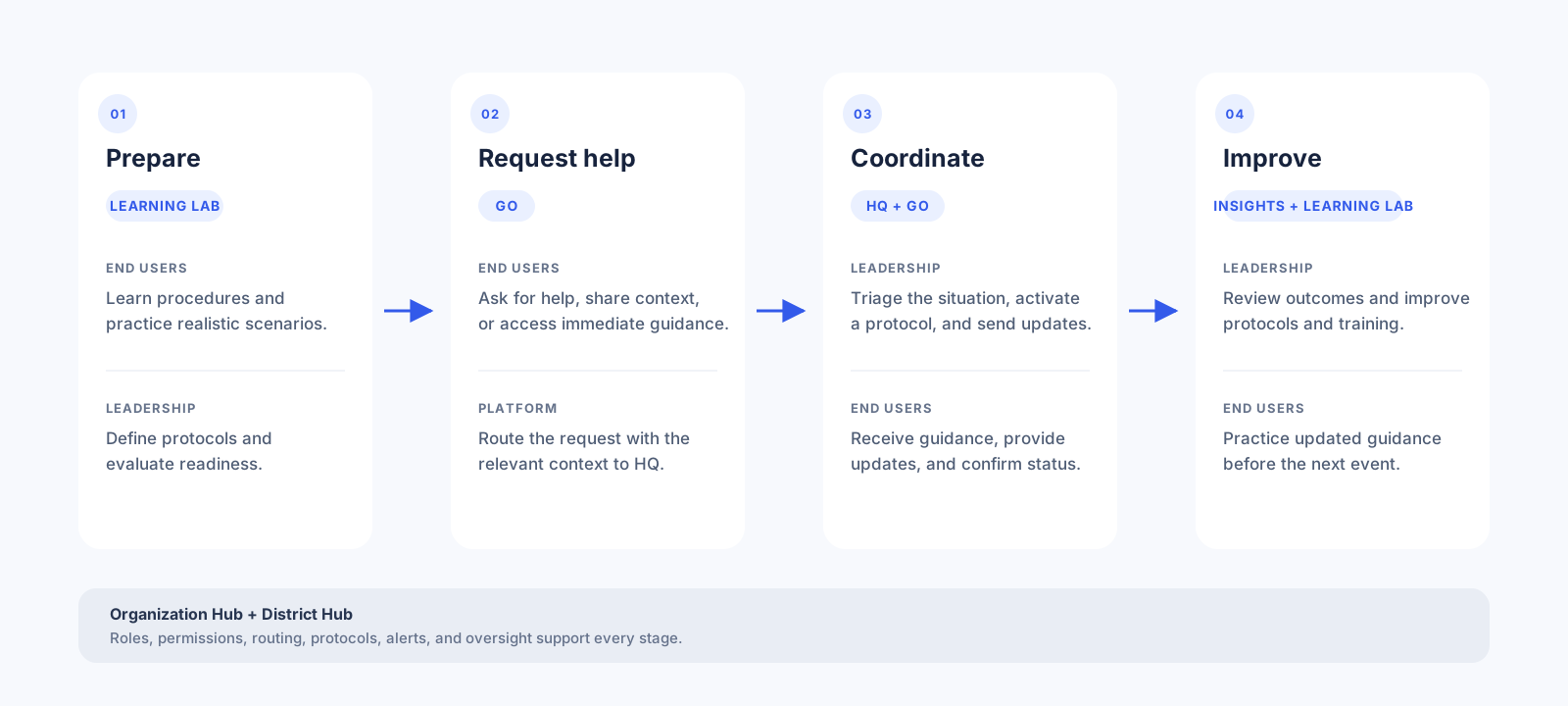
Rather than treating each application as a standalone experience, I organized the ecosystem around the broader response lifecycle:
.svg)
Respondr brought together multiple products, user roles, and interconnected response workflows on a technical foundation that was still evolving. The experience needed to remain intuitive for people with varying levels of technical confidence while staying flexible enough to accommodate new requirements, infrastructure, and use cases.
I used plain language, clear hierarchy, focused actions, and progressive disclosure to reduce cognitive load—especially during time-sensitive workflows and for users with limited technical confidence.
I streamlined critical paths around what users needed in the moment, minimizing the steps required to request help, initiate a response, or update its status.
I designed modular flows, reusable patterns, and flexible layouts so new roles, features, and organizational requirements could be incorporated without rethinking the entire experience.
I aligned terminology, navigation, statuses, and interaction patterns across the suite so users could carry what they learned in one product into the next.
The workflow connects preparation, reporting, coordination, and follow-up across the suite. Staff practice responding to scenarios, use GO to ask questions or request help, and receive guidance from leadership. Administrators then review response activity to identify gaps and inform future preparation.
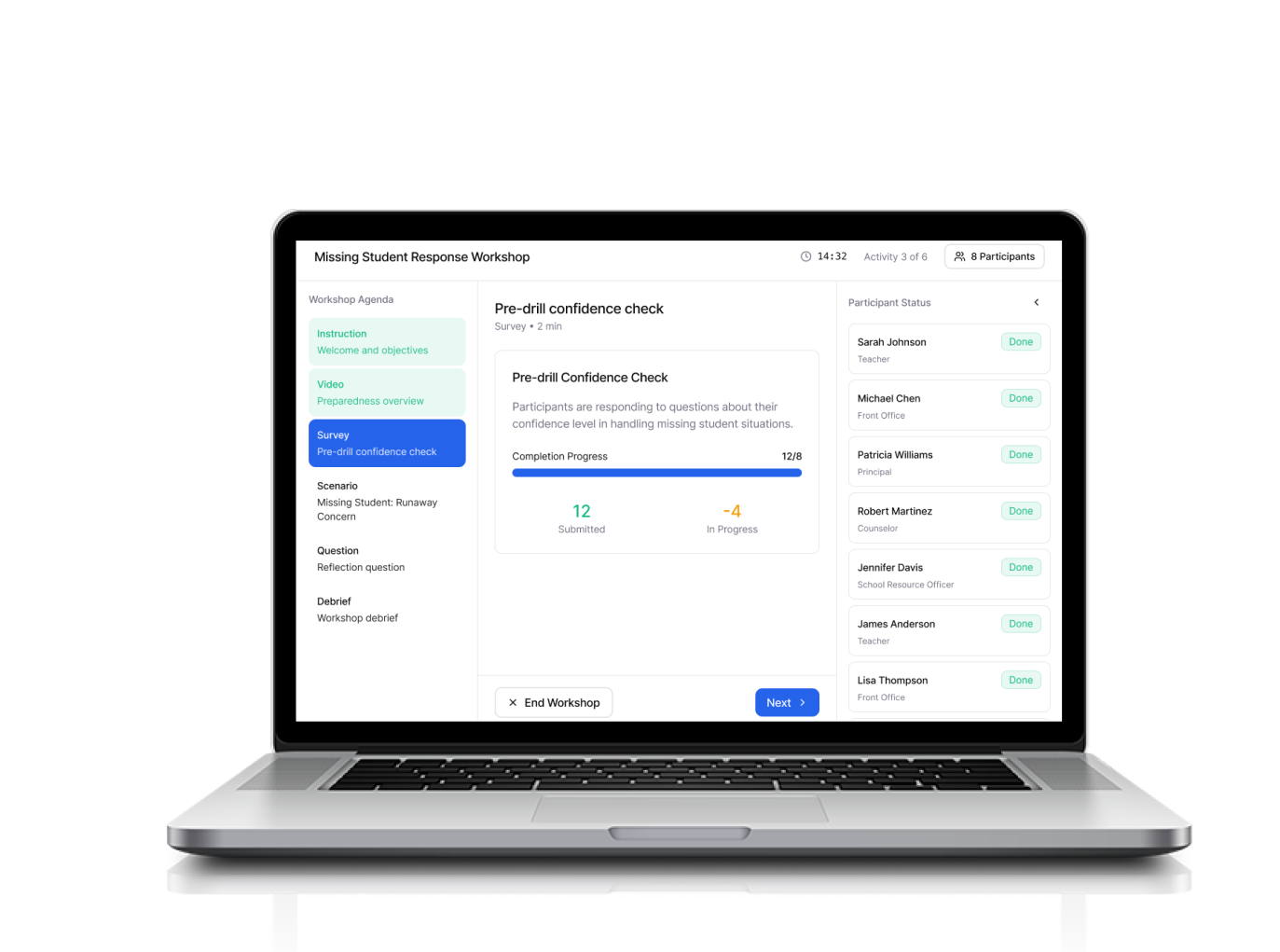
Staff and administrators practice responding to custom scenarios, so they can respond quickly and confidently during live incidents.
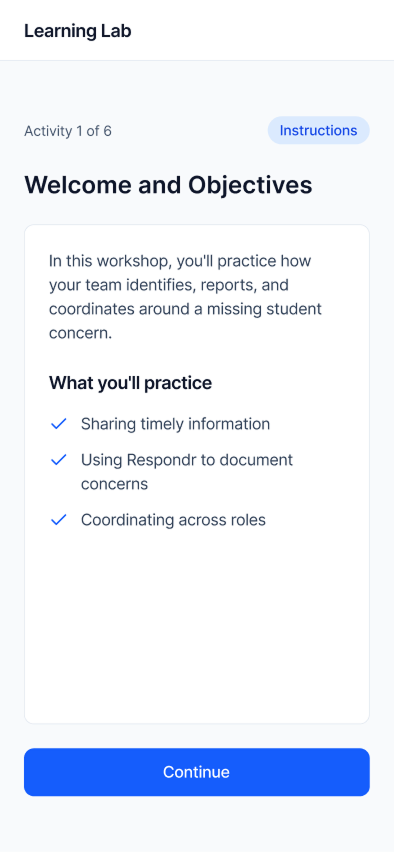
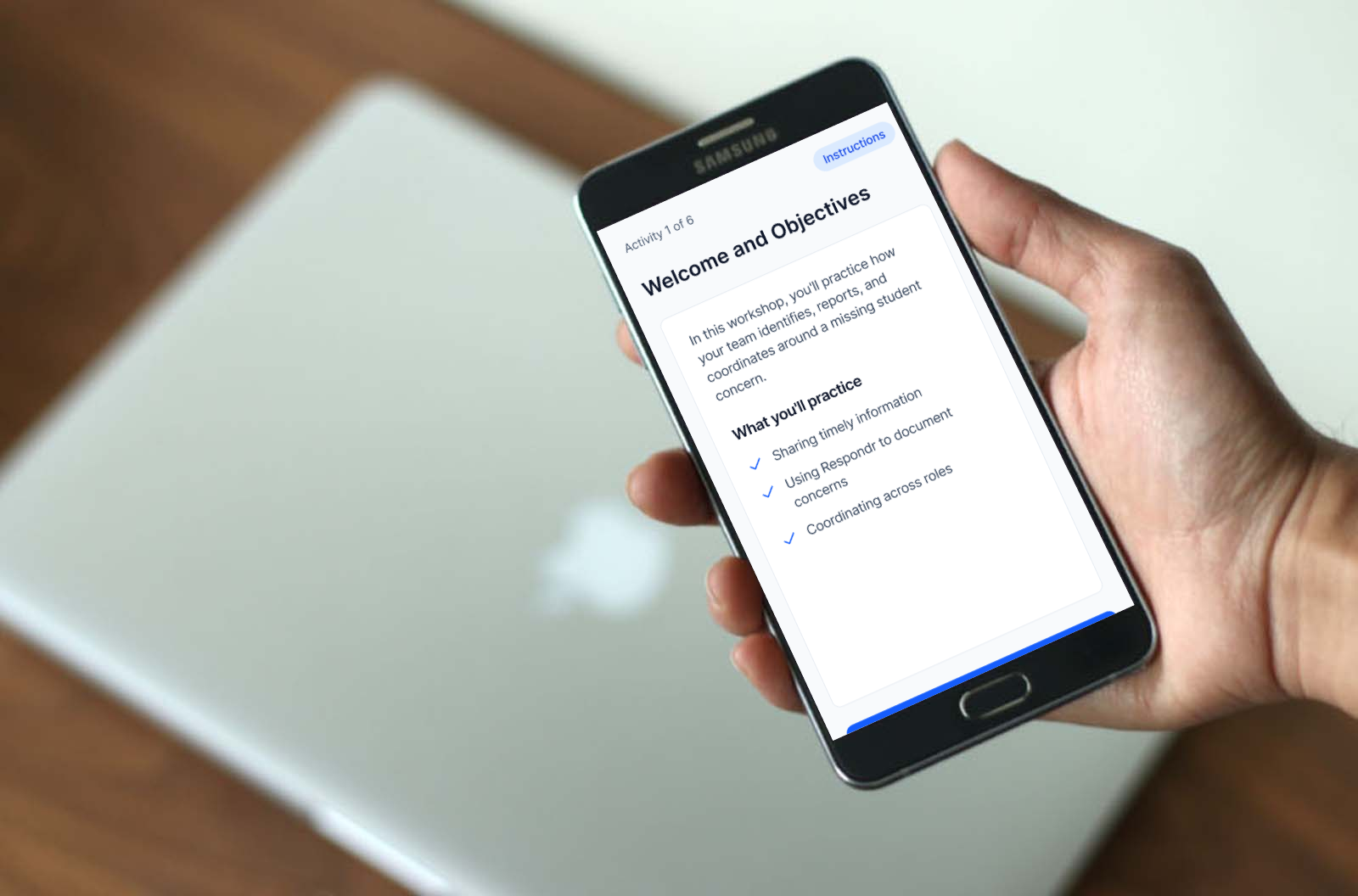
The GO app allows staff to get answers to everyday questions, request help, or report anything out of the ordinary or suspicious.
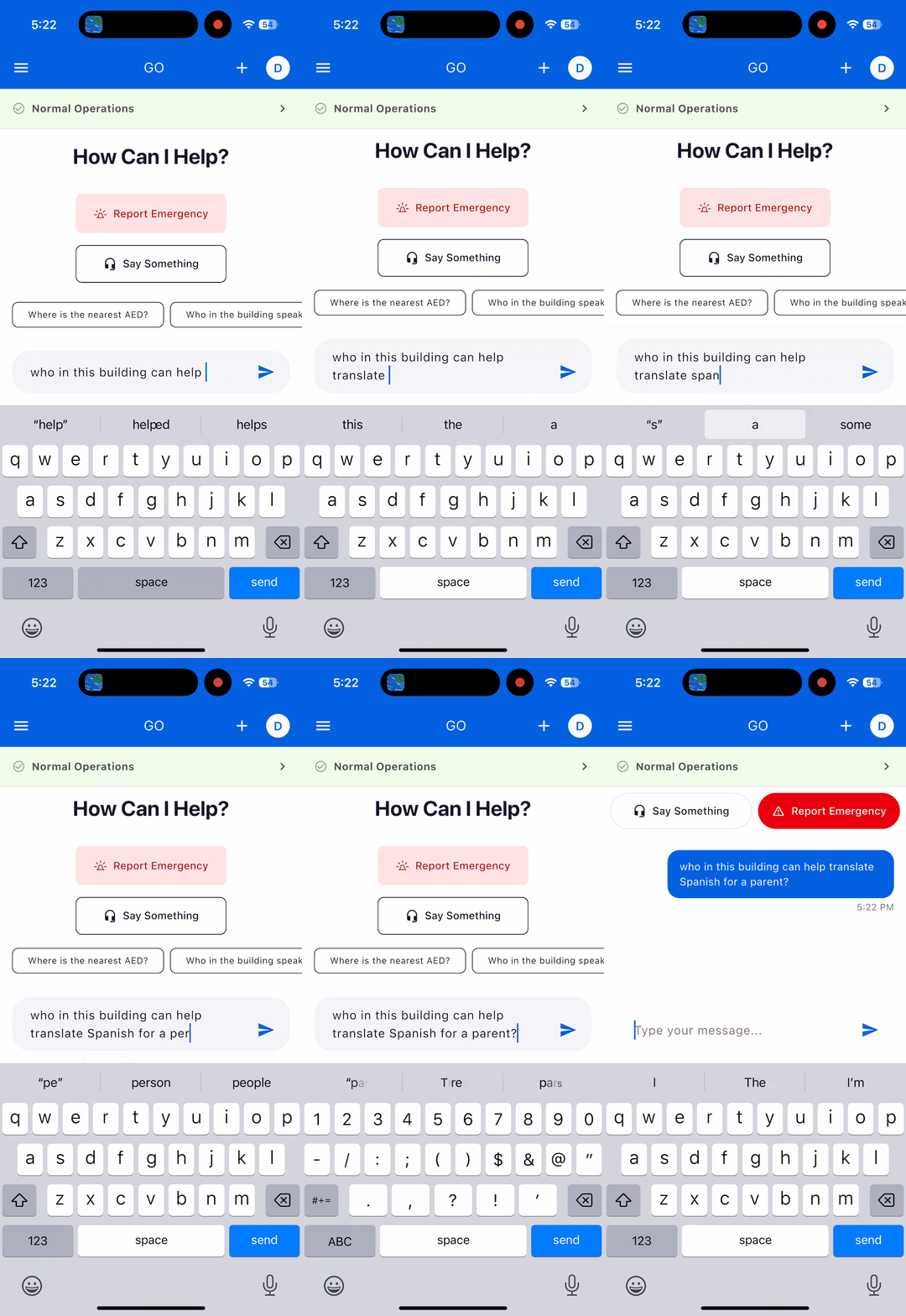
Leadership is notified when a member of their staff requests help or sounds the alarm. Notifications are triaged based on severity and recency.
.png)
Insight Hub provides key insights to administrators so they can assess their organizations for response preparedness and find areas for improvement. Leaders can also easily generate reports to communicate their findings.
.png)
Three decisions illustrate how I balanced guidance, flexibility, and clarity across the platform: giving administrators a usable starting point, designing setup to support ongoing use, and making urgency legible during incident response.
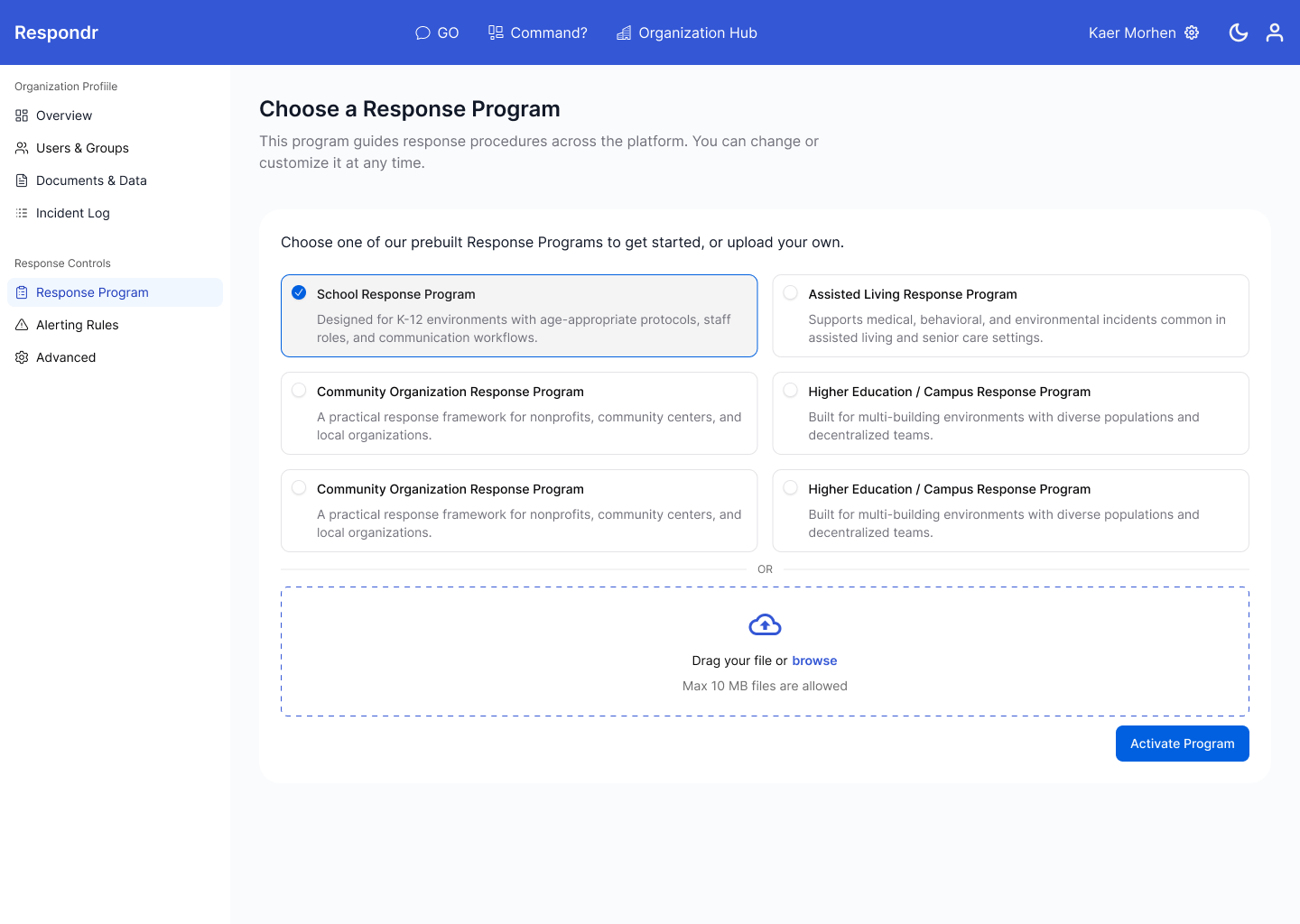
Organizations needed response programs before they could use the platform effectively, but many customers were not expected to have the expertise or technical confidence to create one from scratch.
I designed the first-time experience to recommend an appropriate default program while still allowing organizations to upload or customize their own. This gave less experienced administrators a clear starting point without limiting organizations with more mature processes.
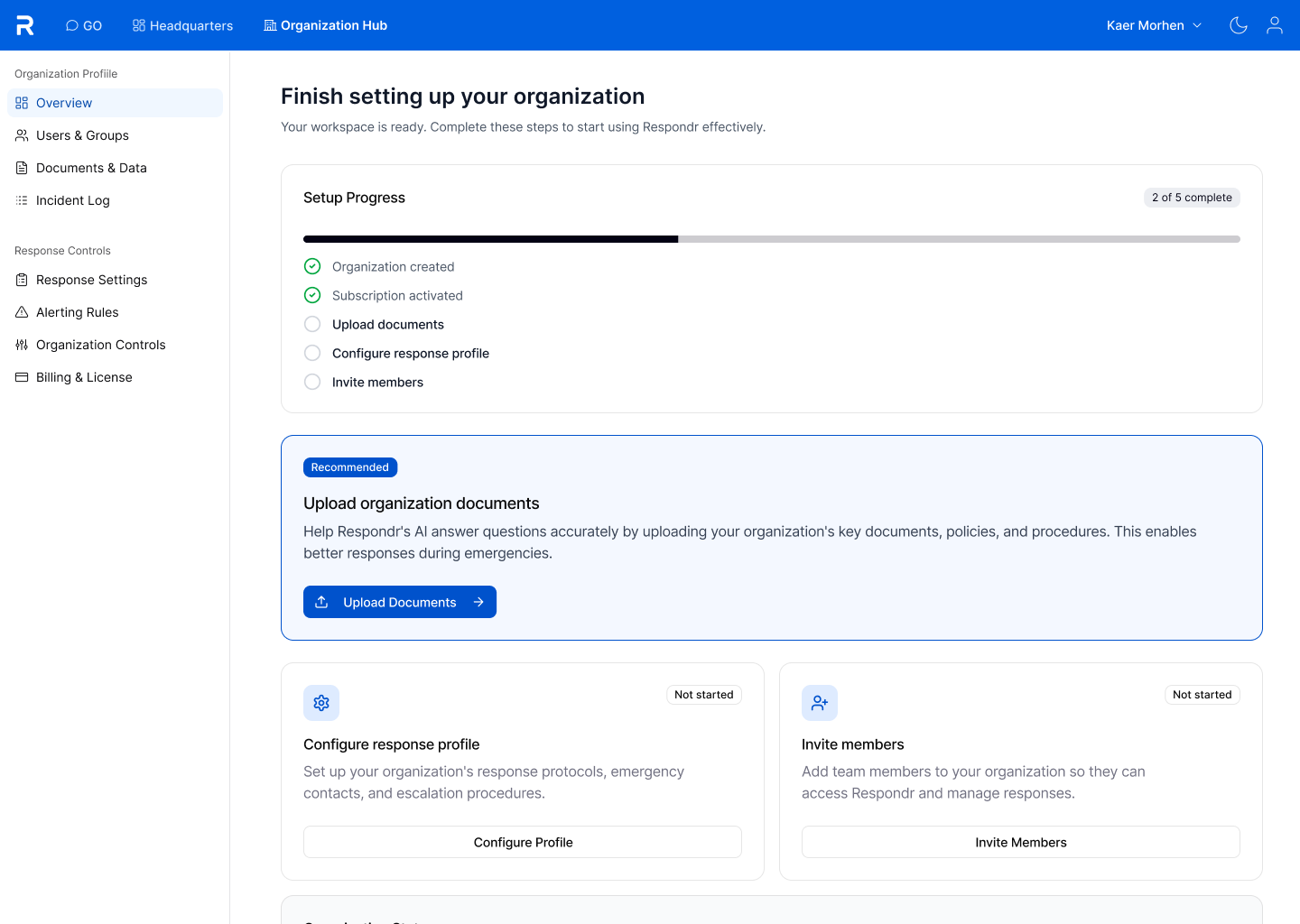
The Organization Profile needed to support initial configuration, but a traditional onboarding checklist would lose its purpose once setup was complete.
I designed the page so its onboarding guidance could transition into persistent quick actions, allowing the same space to support both first-time setup and ongoing administration.
Not every report represented the same level of urgency. Using emergency styling throughout the interface would make everything feel equally critical and weaken the meaning of high-severity states.
I established a tiered severity system—reserving red for high-severity incidents—and emphasized one primary action on incident pages while keeping supporting actions visually secondary.
With requirements changing quickly, I focused on a reusable foundation that could evolve alongside the products. Shared components and interaction patterns supported consistency across the suite while leaving room for workflows with different needs.
I aligned terminology, status treatments, navigation, and primary-action hierarchy across experiences. Reusing these decisions gave me a starting point for new flows and helped keep individual screens connected to the larger system.
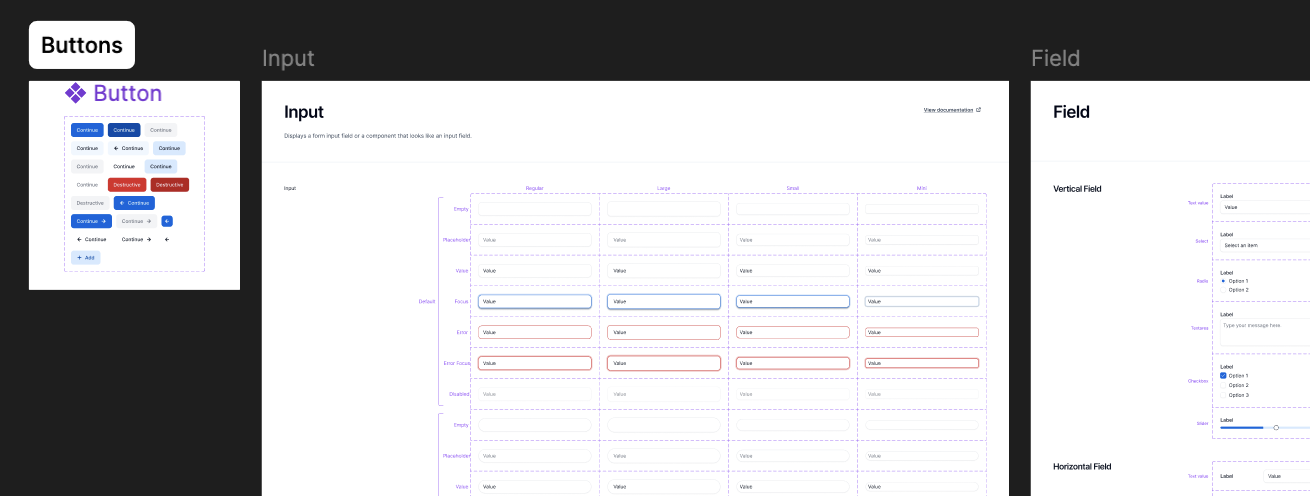
As an early-stage platform, Respondr’s outcomes are best represented by the product foundations established. My work translated an evolving vision into connected workflows, buildable product definitions, and reusable design patterns.
Defined how products, user roles, and workflows fit together across preparation, incident response, and review, creating a coherent direction for the suite.
Translated evolving concepts into user flows, interface designs, prototypes, and product requirements to support engineering collaboration.
Established shared components, terminology, and interaction patterns that provided a consistent starting point as features and requirements evolved.
Explore how I redesigned a complex legacy system to streamline claims processing for thousands of daily active users.
[View Case Study]